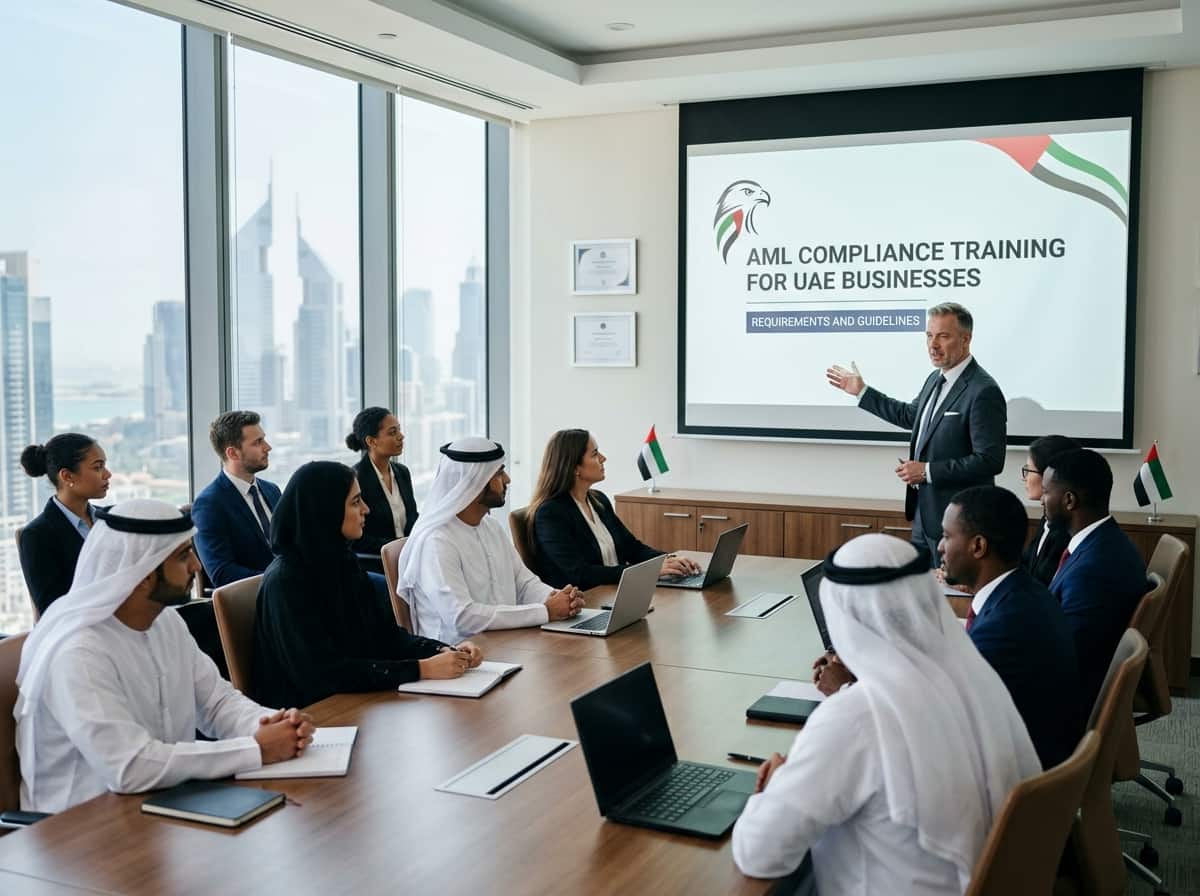

Financial firms in the UAE operate in one of the world’s most dynamic financial markets. While this creates opportunities for growth, it also brings greater regulatory responsibilities. Businesses operating in the Dubai International Financial Centre (DIFC) must comply with the standards set by the Dubai Financial Services Authority (DFSA) while keeping pace with changing regulations, evolving financial risks, and increasing customer expectations.
Many organizations understand the importance of compliance but struggle to maintain consistent processes, documentation, and internal controls. The good news is that these challenges can be managed with the right strategy, governance, and expert support. This guide explores the most common compliance challenges facing financial firms in the UAE, explains how to meet Dubai Financial Services Authority compliance requirements without delays, and outlines how professional compliance services can help organizations build stronger compliance frameworks.
Why Regulatory Compliance Is Becoming More Complex in the UAE

The UAE continues to strengthen its position as a leading international financial hub. As financial services expand, regulatory expectations also evolve to protect investors, maintain market integrity, and reduce financial crime.
Increasing Regulatory Expectations
Financial institutions are expected to maintain effective governance, accurate reporting, and well-documented compliance programs. Regulatory obligations are no longer limited to periodic reviews. Organizations must continuously monitor risks and demonstrate that compliance controls remain effective.
Growth of Digital Financial Services
Digital banking, FinTech solutions, and cross-border financial transactions have introduced new compliance risks. Businesses must address cybersecurity, data protection, anti-money laundering (AML), and technology governance while meeting applicable regulatory requirements.
Rising Expectations from Investors and Customers
Clients and investors increasingly expect transparency, ethical business practices, and strong corporate governance. A mature compliance management system helps organizations build trust while reducing operational and reputational risks.
Common Compliance Challenges Facing Financial Firms in the UAE
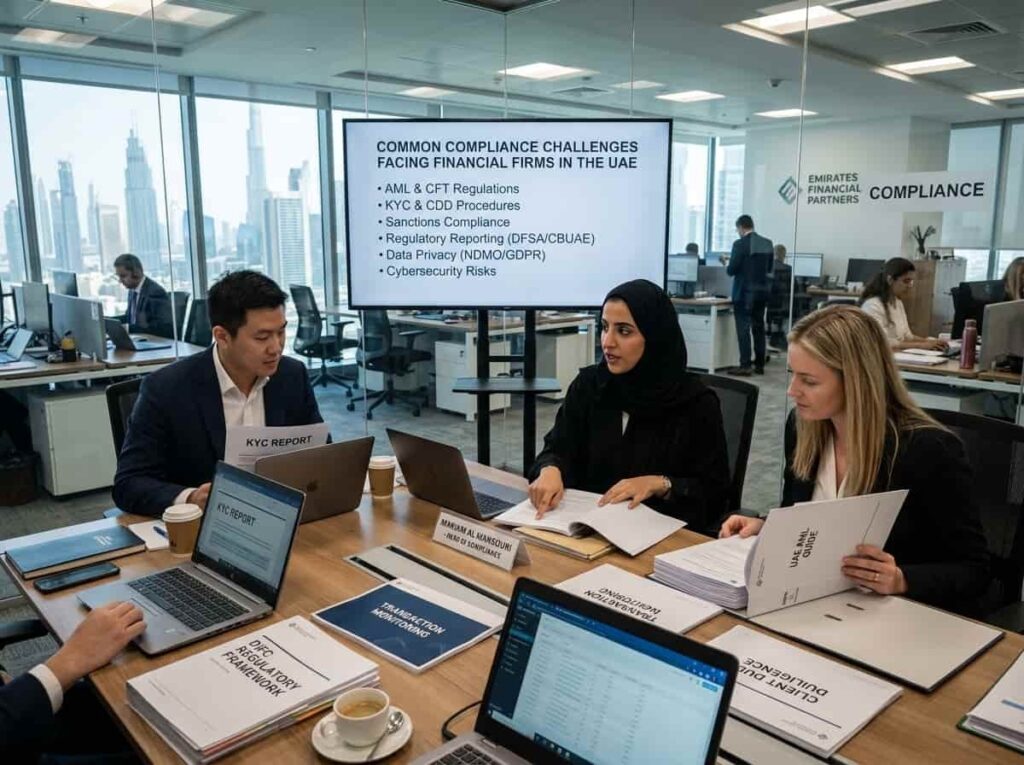
Even well-established organizations can face compliance challenges if their programs are not regularly reviewed and updated.
| Compliance Challenge | Description |
| Keeping Up with Regulatory Changes | Regulatory requirements continue to evolve. Financial firms must monitor new guidance, review internal policies, and update procedures to remain compliant. Delayed implementation can increase regulatory risk. |
| Weak Internal Controls | Strong internal controls help prevent errors, misconduct, and operational failures. Organizations with unclear responsibilities or inconsistent oversight often experience higher compliance risks. |
| Inconsistent Compliance Documentation | Policies, procedures, compliance registers, and supporting evidence should be complete and regularly updated. Missing or outdated documentation can create difficulties during regulatory inspections and independent audits. |
| AML and KYC Compliance Challenges | AML and Know Your Customer (KYC) obligations remain a priority for regulated firms. Businesses must perform customer due diligence, assess financial crime risks, monitor transactions, and maintain accurate records to meet regulatory expectations. |
| Limited Compliance Resources | Many growing organizations operate with small compliance teams that must manage multiple responsibilities. Limited resources can make it difficult to keep pace with regulatory developments while supporting daily business operations. |
| Managing Third-Party Risk | Financial institutions often rely on external vendors for technology, operations, or outsourced services. Effective third-party due diligence and ongoing monitoring help reduce operational and compliance risks. |
| Regulatory Reporting Challenges | Accurate and timely regulatory reporting is essential. Incomplete data, manual processes, or weak review procedures can result in reporting errors and unnecessary regulatory attention. |
| Building a Strong Compliance Culture | Compliance is not solely the responsibility of the compliance department. Employees at every level should understand their obligations, follow internal policies, and participate in regular compliance training. |
Why Addressing Compliance Challenges Early Matters
Organizations that proactively strengthen their compliance programs are generally better prepared for regulatory reviews and changing business conditions.
A structured compliance framework helps organizations:
- Reduce regulatory and operational risks.
- Improve internal decision-making and accountability.
- Build confidence among clients, investors, and business partners.
- Prepare for regulatory inspections with greater efficiency.
- Support long-term business growth through stronger governance.
According to ISO 37301:2021, an effective compliance management system should be integrated into an organization’s governance and operational processes while supporting continual improvement and effective oversight of compliance obligations
How to Meet Dubai Financial Services Authority Compliance Requirements Without Delays

Meeting Dubai Financial Services Authority requirements requires more than simply maintaining policies. Organizations should establish practical compliance programs that adapt as regulations evolve.
Understand Applicable Regulatory Requirements
Every regulated business should understand the DFSA rules that apply to its activities, licensing conditions, governance obligations, and reporting requirements. A clear understanding of regulatory expectations forms the foundation of an effective compliance program.
Conduct a Comprehensive Compliance Gap Assessment
A compliance gap assessment helps identify weaknesses in governance, internal controls, documentation, and operational processes. Addressing these gaps early reduces the likelihood of future compliance issues.
Develop Clear Policies and Procedures
Well-written policies provide employees with clear guidance for managing compliance responsibilities. Regular reviews help ensure procedures remain aligned with current regulatory expectations.
Strengthen AML and KYC Controls
Effective AML compliance includes customer due diligence, enhanced due diligence for higher-risk relationships, sanctions screening, transaction monitoring, and ongoing risk assessments. These measures help reduce exposure to financial crime while supporting regulatory compliance.
Implement Continuous Compliance Monitoring
Compliance should be monitored throughout the year rather than only before regulatory inspections. Internal reviews, compliance testing, and corrective action plans allow organizations to identify and resolve issues before they become larger problems.
Invest in Employee Training
Employees should receive regular compliance training that reflects their specific responsibilities. Ongoing education helps strengthen awareness and encourages a culture of accountability across the organization.
Use Compliance Technology
Many organizations now use Governance, Risk, and Compliance (GRC) platforms and other RegTech solutions to improve regulatory reporting, document management, workflow automation, and compliance monitoring. Technology can increase efficiency while reducing manual errors.
According to the Financial Action Task Force (FATF), financial institutions should adopt a risk-based approach to AML and counter-terrorist financing, allowing resources to focus on higher-risk areas while maintaining effective compliance controls (Financial Action Task Force, 2023).
Best Practices Used by Successful Financial Institutions
Organizations with mature compliance programs often share several characteristics:
- Strong governance supported by senior management.
- Clearly documented policies and procedures.
- Risk-based compliance monitoring.
- Regular independent compliance assessments.
- Continuous policy reviews and updates.
- Ongoing employee training and awareness.
Rather than treating compliance as a one-time project, successful firms integrate governance, risk management, and compliance into their daily operations.
Signs Your Organization May Need Professional Compliance Support
External compliance expertise may benefit organizations that are:
- Preparing for DFSA authorization or regulatory approvals.
- Responding to regulatory findings or audit observations.
- Expanding into new financial services.
- Experiencing rapid organizational growth.
- Operating with limited internal compliance resources.
- Updating outdated compliance frameworks.
Professional advisors can provide independent assessments, practical recommendations, and implementation support tailored to an organization’s regulatory obligations.
Build a Strong DFSA Compliance Framework with Professional Guidance
Developing an effective compliance framework requires experience, industry knowledge, and continuous monitoring. Working with an experienced compliance advisory firm can help organizations identify risks, improve governance, strengthen AML controls, and prepare confidently for regulatory inspections.
At MCompliance, our team supports financial institutions operating within the UAE and DIFC through tailored compliance advisory services, compliance gap assessments, governance reviews, AML program enhancement, regulatory readiness, and ongoing compliance monitoring. Our practical, risk-based approach helps organizations establish sustainable compliance frameworks that align with regulatory expectations while supporting long-term business objectives.
Conclusion
Regulatory compliance continues to evolve alongside the UAE’s growing financial sector. Organizations that invest in strong governance, effective internal controls, and continuous compliance monitoring are better positioned to manage regulatory expectations and support sustainable growth.
Whether your business is strengthening an existing compliance program or preparing for future regulatory obligations, taking proactive steps today can reduce risk tomorrow. Partnering with experienced compliance professionals can help simplify complex requirements and build a resilient compliance framework that supports long-term success.
Ready to strengthen your compliance program? Contact MCompliance to learn how our regulatory compliance advisory services can help your organization meet Dubai Financial Services Authority requirements, improve governance, and build a practical compliance framework designed for lasting success.
For additional insights into Regulatory Compliance, you may find the following links helpful:
- The Impact of Weak Internal Controls on Business Reputation
- Why Financial Crime Compliance Is More Critical Than Ever in 2025
- What is KYC and Why It Matters for Businesses in the UAE
- Understanding the DIFC Data Protection Landscape and Why It Matters
- Understanding KYC & AML: Risk Assessment Steps That Safeguard Your Business
- How the UAE Data Protection Law Impacts Your Business Operations
- Embedding the Risk Management Process in FinTech & Banking Operations