

Compliance professionals operate in an environment where regulatory expectations, financial crime risks, and business models continue to evolve. Technical knowledge therefore needs to be maintained alongside practical experience and professional judgment.
For professionals working in financial services, CISI compliance certification can provide a structured approach to developing regulatory and industry knowledge. Its value, however, should not be viewed simply as obtaining another qualification. The stronger objective is to build the capability required to understand regulatory requirements, assess risk, and contribute meaningfully to compliance and governance decisions.
For compliance professionals in the UAE and GCC, this is particularly relevant as firms navigate frameworks and supervisory expectations across areas such as DFSA regulation, CBUAE requirements, AML/KYC, and financial crime risk.
What Is CISI Compliance Certification?

The Chartered Institute for Securities & Investment (CISI) provides professional qualifications covering a range of financial-services disciplines, including areas relevant to compliance and regulation.
For compliance professionals, structured certification can help establish a foundation of knowledge around financial services, regulatory environments, risk, and professional responsibilities.
There is an important distinction between professional certification and short-term compliance training.
Training may address a specific regulation, process, or technical requirement. A professional qualification takes a broader approach by developing structured knowledge that can support a professional’s understanding of financial markets and regulatory responsibilities.
This distinction matters in compliance. Professionals are not only expected to know what a regulation says. They also need to understand how regulatory requirements affect business activities, controls, governance, and risk.
Why Do Compliance Professionals Pursue CISI Certification?
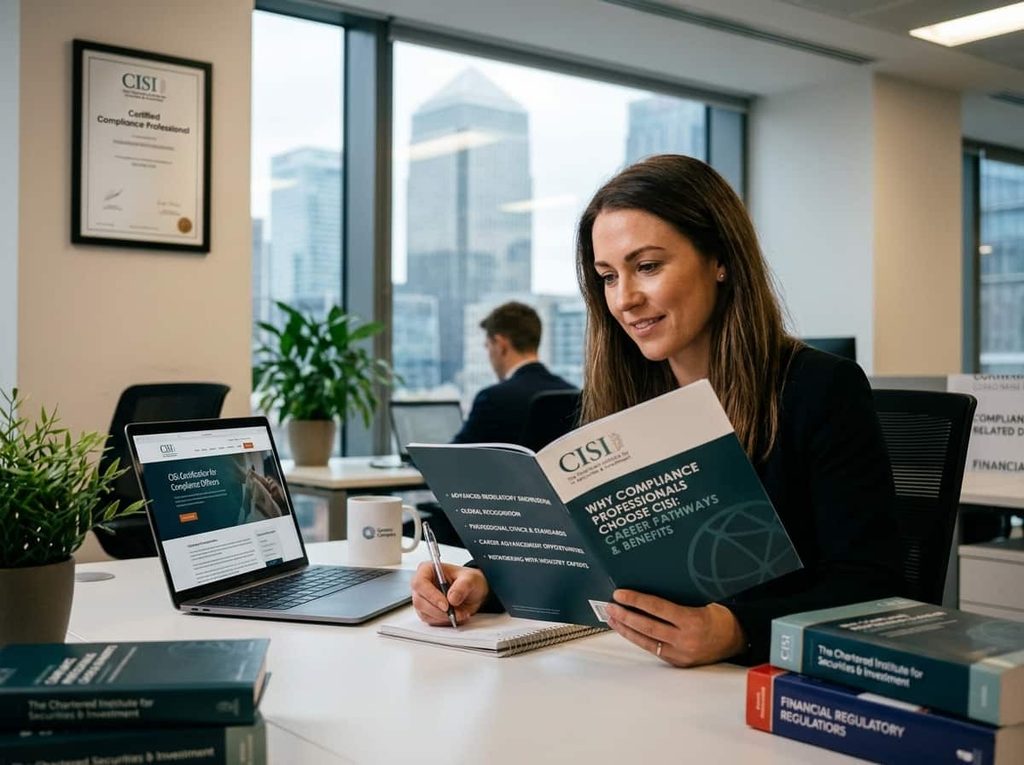
Professional qualifications can support the development of structured regulatory knowledge and demonstrate a commitment to professional development.
For compliance professionals, this can include strengthening their understanding of:
- Financial-services regulation
- Compliance frameworks
- Regulatory risk
- Governance
- Risk management
- Financial crime
- Regulatory responsibilities
- Professional standards
In the UAE, compliance professionals may also need to operate across regulatory environments involving the DFSA, CBUAE, SCA, and the wider UAE AML/CFT framework.
A formal qualification can provide a useful foundation for understanding these broader concepts. It can also support professionals as they take on greater responsibilities within compliance, risk, and financial services.
However, certification should not be treated as a substitute for experience.
Its value is strongest when technical knowledge is applied to real regulatory and business situations.
Which CISI Compliance Certification Level Is Right for You?
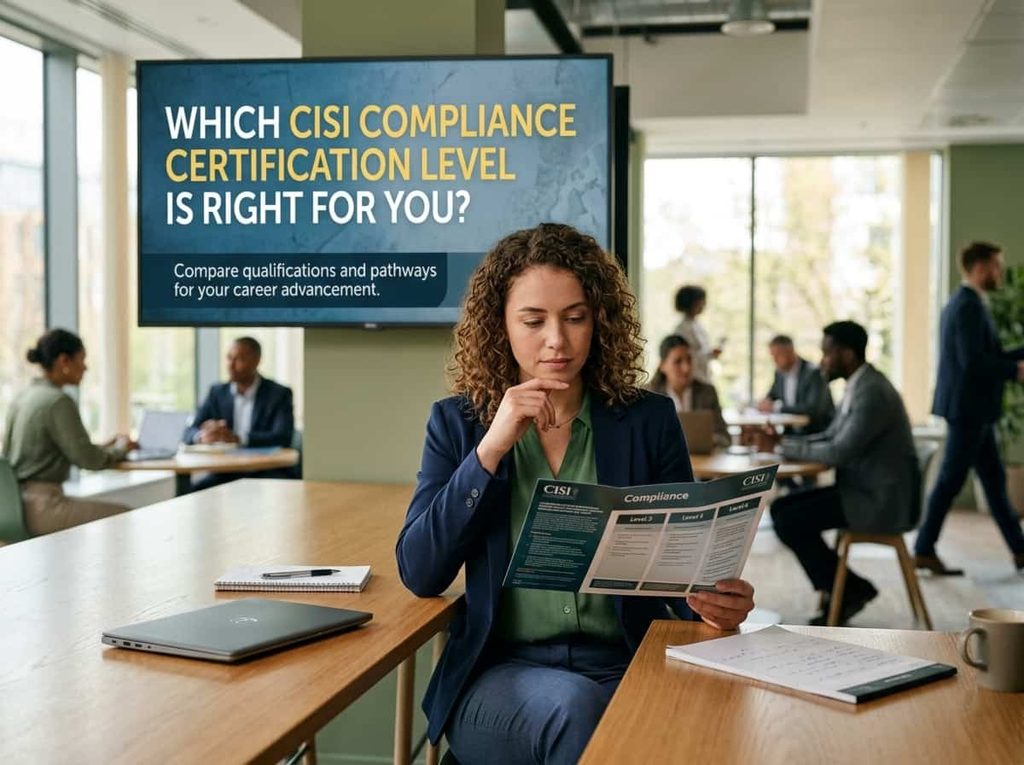
The appropriate CISI qualification depends on a professional’s existing knowledge, experience, and career objectives. Mukhtara’s focus on CISI Levels 2, 3, and 6 provides a useful framework for considering progression across different stages of professional development.
CISI Level 2
Level 2 can be considered within the context of foundational professional development.
For individuals beginning their careers or developing their understanding of financial services, foundational knowledge can provide an important basis for progressing into more specialized compliance and regulatory responsibilities.
At this stage, the objective is to establish a sound understanding of relevant concepts rather than attempting to address every aspect of senior compliance practice at once.
CISI Level 3
Level 3 represents a further stage of professional development for individuals seeking to strengthen their technical knowledge.
Professionals with some exposure to financial services may benefit from developing a more detailed understanding of regulatory and compliance concepts and how these relate to professional responsibilities.
For those progressing within compliance, this deeper knowledge can support stronger engagement with regulatory requirements and risk-related discussions.
CISI Level 6
Level 6 is more appropriate to consider in the context of advanced professional development and more experienced practitioners.
At a senior level, compliance professionals are expected to move beyond technical knowledge and demonstrate sound judgment when assessing regulatory risk, governance, controls, and business decisions.
Advanced study can therefore form part of a broader effort to strengthen the capability required for more complex financial-services environments.
The appropriate qualification should always be assessed against the current CISI qualification specifications, the individual’s experience, and their professional objectives.
CISI Certification and the Role of the Modern Compliance Professional

The role of the compliance professional has changed significantly.
Compliance is no longer limited to identifying breaches or maintaining regulatory documentation. Modern compliance functions are increasingly expected to help management understand regulatory risk and determine whether the firm’s controls remain appropriate.
This requires professionals to understand:
- Regulatory frameworks
- Risk management
- AML and KYC
- Financial crime risk
- Compliance monitoring
- Regulatory change
- Governance
- Business models
- Senior management expectations
The strongest compliance professionals are able to interpret regulatory requirements and translate them into practical considerations for the business.
This is where professional development becomes relevant.
The objective is not simply to know more regulations. It is to develop the ability to interpret those requirements, identify their implications, and exercise sound professional judgment.
How CISI Certification Supports Compliance Capability in UAE Financial Services
The UAE financial-services sector operates within a developing regulatory environment involving multiple supervisory and regulatory frameworks.
Depending on the institution and its activities, professionals may need to understand requirements associated with the DFSA, CBUAE, SCA, and UAE AML/CFT framework.
Professional certification can provide part of the technical foundation required to work effectively within this environment.
It can help professionals develop a structured understanding of financial-services regulation and provide a basis for continuing professional development as their responsibilities evolve.
However, a qualification should never be presented as a guarantee of regulatory compliance.
DFSA compliance, CBUAE compliance, AML compliance, and other regulatory responsibilities depend on how an institution actually implements its policies, controls, governance arrangements, monitoring processes, and risk-management framework.
Professional knowledge supports that process; it does not replace it.
Certification Is Not a Substitute for Practical Compliance Experience
A certificate can demonstrate knowledge. It cannot, by itself, demonstrate how a professional will respond when a genuine regulatory issue arises.
Compliance professionals must be able to apply knowledge to situations involving:
- Regulatory risk assessment
- Control design
- Compliance monitoring
- Breach identification
- Risk escalation
- Regulatory reporting
- AML/KYC controls
- Governance
- Senior management decisions
- Regulatory engagement
This creates an important distinction between knowledge and application.
A professional may understand a regulatory requirement but still need practical experience to determine how that requirement should be reflected in a firm’s processes and controls.
The strongest compliance capability therefore combines:
Professional qualification + practical experience + regulatory judgment.
That combination is particularly important for professionals working in senior compliance and risk roles.
What Senior Compliance Leaders Should Look for in Professional Development
For Chief Compliance Officers, Risk Directors, and senior management, professional development should be considered in the context of the firm’s broader compliance capability.
The relevant questions are not simply how many qualifications employees hold.
Senior leaders should consider whether professional development:
- Strengthens technical regulatory knowledge
- Supports risk-based thinking
- Improves regulatory interpretation
- Develops professional judgment
- Addresses relevant knowledge gaps
- Reflects the firm’s regulatory environment
- Supports continuing professional development
- Complements practical compliance experience
A strong compliance function requires more than individual credentials. It requires people with the knowledge and confidence to identify weaknesses, challenge decisions, escalate concerns, and communicate regulatory risk effectively.
The objective should therefore not be to accumulate qualifications. It should be to build a compliance function capable of understanding, challenging, and responding to regulatory risk.
How to Approach CISI Compliance Certification Strategically
Professionals considering CISI certification should approach qualification as part of a longer development strategy.
1. Assess Your Current Role
Consider whether you are entering compliance, developing technical expertise, or preparing for more senior responsibilities.
2. Identify Knowledge Gaps
Determine which areas of regulation, financial services, risk, or compliance require further development.
3. Select the Appropriate Level
Choose a qualification that aligns with your existing knowledge, professional experience, and career objectives.
4. Apply the Knowledge
Connect what you learn to actual compliance, risk, governance, and regulatory issues encountered in the workplace.
5. Continue Developing
Regulatory knowledge cannot remain static. Continuing professional development is necessary as regulations, supervisory expectations, financial products, and risks evolve.
CISI Compliance Certification and Long-Term Regulatory Capability
CISI compliance certification can form part of a broader professional-development strategy for individuals working in financial services.
For UAE professionals, that development may extend into areas such as AML/KYC, DFSA regulation, CBUAE requirements, regulatory risk, governance, financial crime, and compliance monitoring.
This broader perspective is important because regulatory competence is not built through one qualification alone.
It develops through the combination of structured learning, practical experience, continuing professional development, and exposure to real regulatory issues.
For institutions, the same principle applies. Building an effective compliance function requires investment in people who can understand regulatory requirements and apply them appropriately to the firm’s risk profile.
Final Thoughts: Building Capability Beyond Certification
CISI compliance certification can provide a structured foundation for professionals seeking to strengthen their regulatory knowledge and financial-services expertise.
But certification alone does not create an effective compliance professional.
Its value becomes more meaningful when combined with practical experience, sound judgment, regulatory awareness, and the ability to assess and challenge risk.
For financial institutions operating across the UAE and GCC, this combination is increasingly important. Regulatory expectations continue to develop, and compliance functions are expected to contribute not only to regulatory adherence but also to effective governance and risk management.
The objective, ultimately, is not simply to hold a qualification. It is to develop the professional capability required to operate confidently and responsibly within a complex regulatory environment.
For more details about CISI certification, you may check out this LinkedIn post – Which CISI Level is Right for You?