
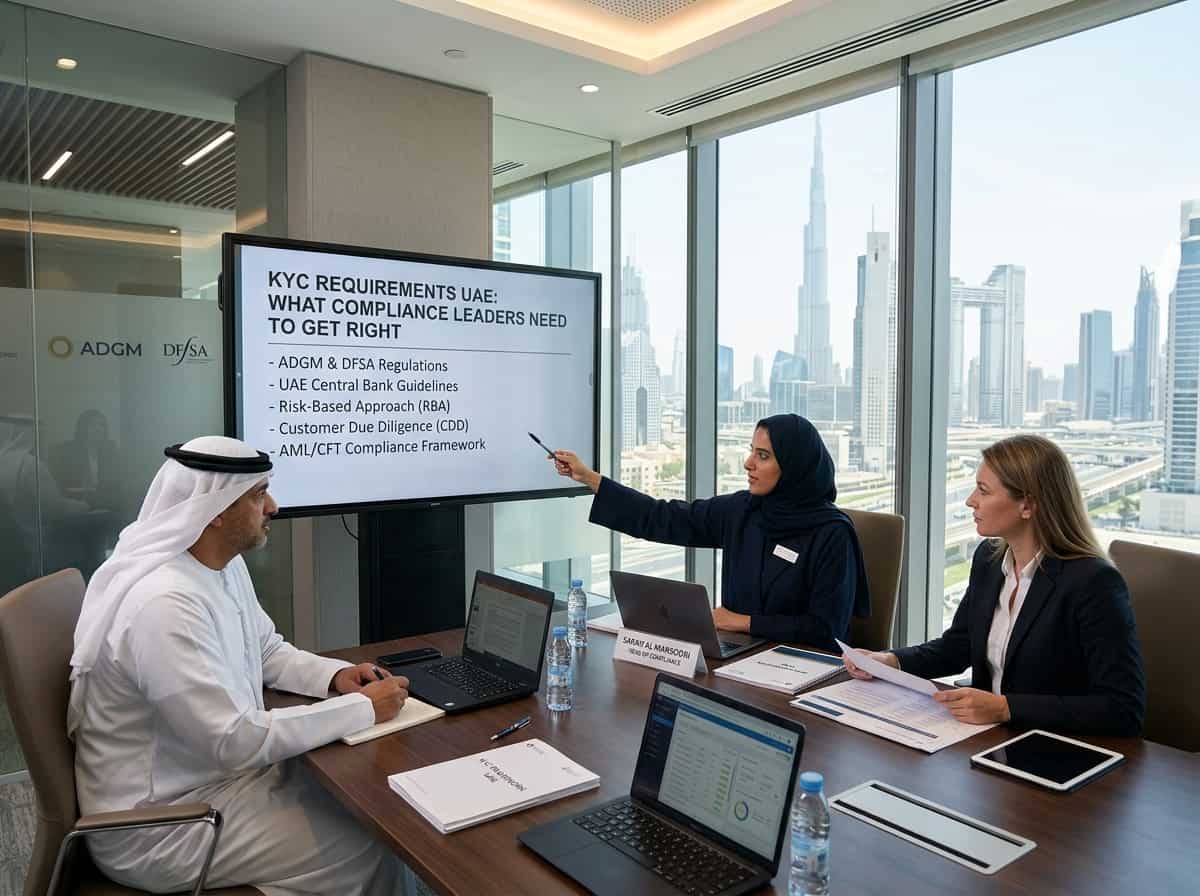
KYC requirements in the UAE form an important part of the broader anti-money laundering and counter-terrorist financing (AML/CFT) control environment. For banks, financial institutions, fintech businesses, investment firms, and other regulated entities, knowing who a customer is is only the starting point.
Effective KYC requires firms to understand the nature of the customer relationship, assess relevant risks, identify beneficial ownership, and maintain information that remains appropriate throughout the relationship.
The important question for compliance leaders is therefore not simply whether customer documents have been collected. It is whether the firm’s KYC framework enables it to make a defensible assessment of customer risk and respond when that risk changes.
What Are the KYC Requirements in the UAE?
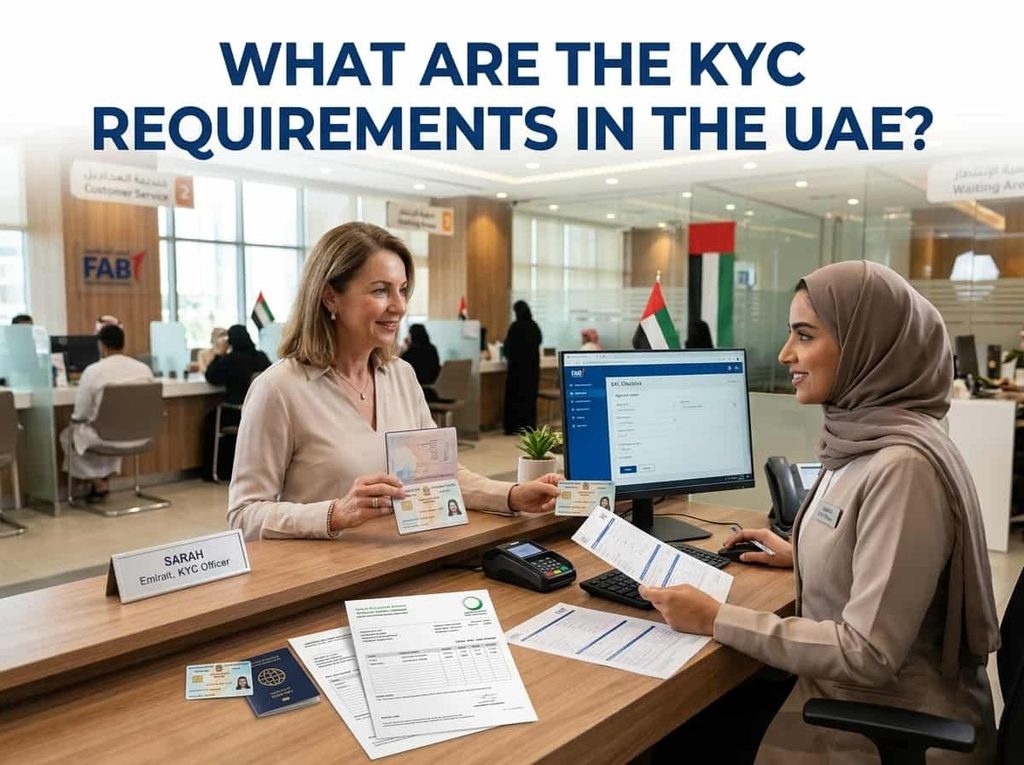
KYC requirements in the UAE are closely connected to Customer Due Diligence (CDD) obligations under the country’s AML/CFT framework.
Depending on the nature of the business and applicable regulatory requirements, a robust KYC framework generally involves:
- Identifying and verifying customers
- Understanding the purpose and intended nature of the relationship
- Identifying beneficial owners
- Assessing customer risk
- Understanding source of funds and, where appropriate, source of wealth
- Applying enhanced due diligence to higher-risk relationships
- Conducting ongoing monitoring
- Maintaining appropriate customer records
- Identifying and escalating potentially suspicious activity
The exact requirements can differ according to the firm’s activities, customer profile, risk exposure, and applicable regulatory framework.
For compliance professionals, this means KYC should be designed around the institution’s actual risk environment rather than treated as a standard onboarding procedure applied identically to every customer.
Why KYC Is a Risk Management Function, Not an Administrative Exercise

A customer file can contain identity documents, ownership information, and screening results and still fail to provide a sufficiently clear understanding of the customer’s risk.
The purpose of KYC is not simply to collect information. It is to use relevant information to make informed decisions.
A stronger KYC framework asks:
- Does the customer’s profile make sense?
- Is the beneficial ownership structure understood?
- Is the customer’s expected activity consistent with the business relationship?
- Is the source of funds appropriately understood?
- Where relevant, does the source of wealth make sense?
- Has the customer’s risk profile changed?
- Are unusual activities identified and escalated?
This distinction is important.
The question is not whether the firm has collected sufficient documents. The question is whether those documents enable the firm to make a defensible assessment of customer risk.
That is where KYC becomes a genuine compliance and risk-management function rather than a documentation exercise.
Key Elements of KYC Compliance in the UAE
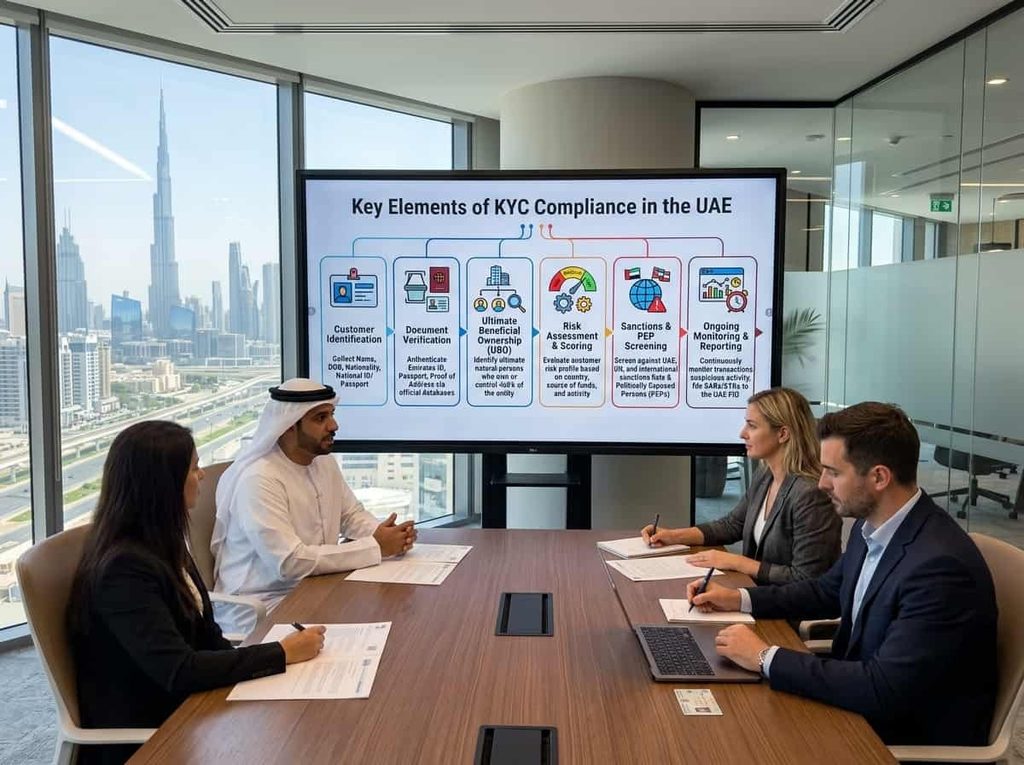
Customer Identification and Verification
The foundation of KYC is establishing who the customer is and verifying that identity using appropriate and reliable information.
For individuals, this may involve verifying identity and relevant personal information. For legal entities, the process can require a deeper understanding of the organisation, its structure, ownership, and control.
The objective is to establish a reliable customer profile before and during the business relationship.
Beneficial Ownership
Understanding who ultimately owns or controls a legal entity is a critical part of customer due diligence.
Complex ownership structures can make this assessment more difficult, particularly when multiple entities, jurisdictions, or layers of ownership are involved.
Compliance teams should therefore be able to demonstrate how beneficial ownership was established and how relevant information was assessed.
Customer Risk Assessment
Not every customer presents the same level of risk.
Customer risk assessments may consider factors such as the customer’s business activities, geographic exposure, ownership structure, expected transactions, products and services used, and other relevant risk indicators.
A risk-based approach allows institutions to allocate greater compliance attention where exposure is higher.
Source of Funds and Source of Wealth
Understanding the origin of a customer’s funds can be important when assessing whether activity is consistent with the customer’s profile.
Source of wealth can provide additional context regarding how a customer’s overall wealth was accumulated.
These assessments become particularly relevant where the nature or level of risk requires greater scrutiny.
Ongoing Monitoring
KYC does not end when a customer is onboarded.
Customer information, activities, ownership structures, and risk profiles can change over time. Ongoing monitoring helps institutions identify changes that may require further review or an updated risk assessment.
A customer considered low risk at onboarding should not automatically remain low risk indefinitely.
Enhanced Due Diligence for Higher-Risk Customers
Higher-risk relationships generally require stronger controls and deeper scrutiny.
Potential risk indicators may include:
- Complex ownership structures
- Higher-risk jurisdictions
- Politically exposed persons (PEPs)
- Unusual or unexplained transaction activity
- High-risk business activities
- Adverse information
- Inconsistencies in customer information
Enhanced Due Diligence (EDD) is intended to provide additional information and controls where the risk warrants them.
Importantly, a higher-risk classification does not necessarily mean that a customer must be rejected.
It means that the institution should apply controls proportionate to the identified risk and be able to demonstrate why its approach is appropriate.
Common Weaknesses in UAE KYC Frameworks

KYC frameworks can appear comprehensive on paper while remaining ineffective in practice.
Common weaknesses can include treating KYC as a one-time onboarding checklist, incomplete beneficial ownership information, weak customer risk classification, outdated customer records, insufficient source-of-funds analysis, and inconsistent escalation procedures.
Another issue is over-reliance on automated screening or onboarding systems.
Technology can improve efficiency, but a system-generated result does not eliminate the need for appropriate compliance judgment.
The more important question is whether the institution can identify weaknesses in its KYC process and demonstrate how those weaknesses are addressed.
For compliance leaders, this requires looking beyond whether procedures exist and examining whether the controls operate as intended.
KYC Requirements for Different UAE Financial Businesses
KYC requirements can vary depending on the type of business, regulated activity, customer base, and applicable supervisory framework.
For example, compliance considerations may differ between:
- CBUAE-regulated financial institutions
- DFSA-regulated firms
- Banks
- Investment firms
- Fintech businesses
- Virtual asset and crypto-asset businesses
This is why a single KYC framework should not simply be copied across different business models.
The institution’s compliance arrangements should reflect its specific regulatory obligations, products, customers, geographic exposure, and risk profile.
For senior compliance professionals, regulatory mapping is therefore an important part of maintaining an effective KYC framework.
What Compliance Leaders Should Review in Their KYC Framework
Senior management and compliance teams can assess the effectiveness of their KYC arrangements by considering several questions.
1. Customer Identification
Can the institution reliably establish and verify who its customers are?
2. Beneficial Ownership
Can the firm clearly identify individuals who ultimately own or control relevant legal entities?
3. Risk Classification
Are customer risk ratings supported by documented reasoning and relevant risk factors?
4. Ongoing Monitoring
Does the institution identify changes that could affect the customer’s risk profile?
5. Escalation
Are unusual or potentially suspicious issues identified and escalated through appropriate channels?
6. Governance
Does senior management receive meaningful information about KYC weaknesses, emerging risks, and remediation?
These questions help move KYC assessment beyond a checklist and toward the effectiveness of the overall control environment.
KYC Compliance Requires More Than Technology
Digital onboarding, automated screening, transaction monitoring, and customer-data platforms can strengthen KYC processes.
They can improve data collection, screening efficiency, monitoring, record management, and operational consistency.
But technology does not replace compliance judgment.
Automated systems still require appropriate configuration, governance, testing, exception handling, human oversight, and periodic review.
A system can identify an alert. A compliance professional still needs to determine what that alert means in context.
Technology should strengthen KYC controls, not become a substitute for professional judgment.
Final Thoughts on KYC Requirements UAE
Strong KYC is not demonstrated by the number of documents collected during onboarding.
It is demonstrated by whether an institution can understand customer risk, establish ownership and control, maintain relevant information, identify changes, and respond appropriately when concerns emerge.
For UAE financial institutions and other regulated businesses, this requires KYC to operate as part of a broader AML/CFT and regulatory risk framework.
The strongest approach connects customer due diligence, beneficial ownership, risk assessment, enhanced due diligence, ongoing monitoring, governance, and professional judgment.
For compliance leaders, the objective should therefore be more than meeting a documentation requirement. It should be building a KYC framework capable of identifying and responding to financial crime and regulatory risk as the business evolves.
For more information about KYC requirements you may check this LinkedIn post – KYC Controls