
How to protect your UAE business from compliance failures and penalties
Regulatory compliance isn’t just “nice to have” it’s essential for business survival and success. In the UAE’s fast‑evolving regulatory environment, even small slips can lead to serious consequences, from fines and licence issues to operational disruptions and reputational harm (Commenda, 2026). This guide will help you understand why compliance fails, how a risk control process can prevent penalties, and how to choose the right partner to safeguard your business.
Why Compliance Matters And Why It Often Fails

Understanding Regulatory Enforcement
Regulators in the UAE including the Central Bank of the UAE and zone‑specific authorities such as the Dubai Financial Services Authority (DFSA) enforce strict compliance standards in areas like tax, anti‑money laundering (AML), and corporate governance. Failure to meet these standards can result in more than financial penalties; regulators have the authority to suspend or revoke licences, restrict activities, and impose operational sanctions to enforce compliance.
Non‑compliance often begins with small gaps like late filings, missing documentation, or inconsistent internal procedures that quietly accumulate into significant enforcement actions. Because compliance is multi‑layered (federal + emirate + free zone), the same issue can trigger penalties from several authorities at once (Commenda, 2026).
Common Reasons Businesses Fail Compliance
Compliance failures often stem from weaknesses deep inside an organisation, not a lack of intent. Some typical causes include:
- Unclear or outdated procedures — employees aren’t sure what to do or how to do it.
- Lack of ongoing training — teams aren’t kept up to date on regulatory changes.
- Documentation gaps — missing evidence, records, or audit trails when regulators ask.
- Siloed departments — inconsistent practices between teams create blind spots.
In fact, many UAE businesses fail compliance tests because of documentation and record‑keeping failures, affecting VAT, tax filings, and AML programmes (ASC Global, 2025).
Consequences of Non‑Compliance Beyond Fines
Regulatory penalties in the UAE extend far beyond just monetary fines:
- Licence suspension or renewal delays
- Blocked banking transactions
- Escalation to audits or enforcement authorities
- In the UAE, non‑compliance can result in licence or permit restrictions, disrupting business operations (Commenda, 2026).
Repeated violations can lead to recurring penalties and deeper regulatory scrutiny costing far more than implementing a proper compliance process in the first place.
Ensuring compliance isn’t just about avoiding penalties; it also builds trust with customers, partners, and investors, a vital asset in the UAE’s reputation‑focused market.
How a Risk Control Process Prevents Regulatory Penalties

What Is a Risk Control Process?
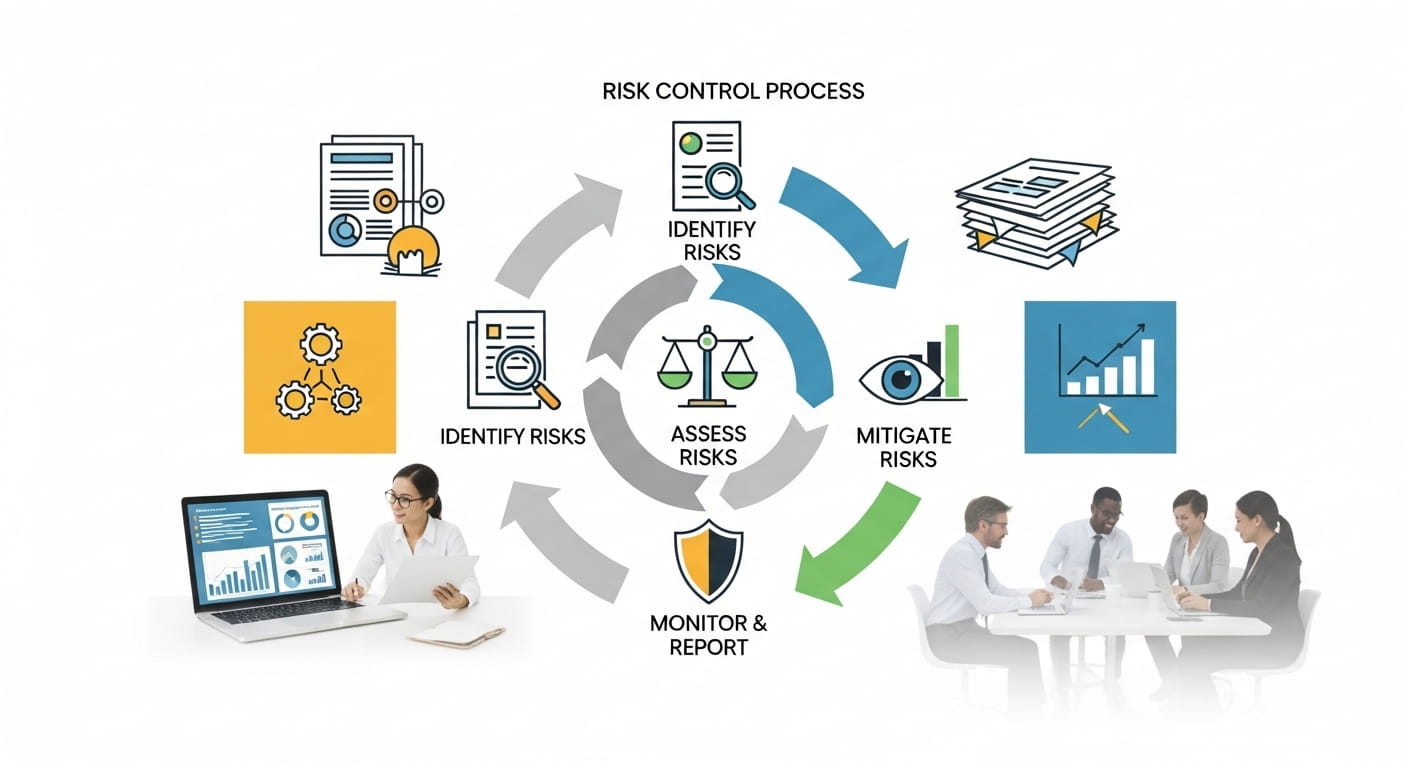
A risk control process is a structured way to identify, assess, and manage the risks that could lead to compliance failures. It ensures that laws, regulations, and internal standards don’t just exist on paper they are understood, practiced, and monitored every day.
This process becomes the backbone of compliance, enabling early detection of risks and preventing problems before they become costly penalties.
Core Steps of an Effective Risk Control Process
A strong risk control process typically includes:
| Step | Description |
| Risk Identification and Assessment | – Spot areas where non‑compliance could happen.– Determine the impact and urgency of each risk. |
| Control Design and Implementation | – Put in place policies, procedures, and tools that manage identified risks. |
| Continuous Monitoring and Reporting | – Track compliance activities and alerts so breaches are caught early. |
| Ongoing Review and Improvement | – Update processes as regulatory expectations evolve. |
These steps create a control environment that’s proactive and responsive, not reactive.
How It Reduces Regulatory Penalties
Implementing a robust risk control process prevents penalties by:
- Detecting issues early — before regulators spot them.
- Standardising practices across teams — fewer mistakes, fewer violations.
- Keeping documentation ready — audits become smoother and less stressful.
Companies that monitor and update their controls regularly are much less likely to face enforcement actions and when they do, they’re in a better position to defend themselves. This is especially important in areas like tax, AML, and corporate governance, where regulators expect risk‑based compliance tailored to the business’s profile (Risk‑Based Compliance, 2026).
The Role of Technology and Automation
Modern risk control isn’t manual alone. Digital tools help businesses:
- Automate alerts for upcoming filings or deviations from control standards.
- Centralise reporting for easier audit preparation.
- Analyse trends and flag patterns before they turn into compliance breaches.
These technologies make compliance more efficient and dependable, shifting the burden from “fixing problems” to “preventing them.”
Choose Your Risk Control Process Partner: Questions to Ask Before Buying
Why Having a Partner Matters
While internal teams can manage elements of compliance, partnering with experienced experts can:
- Provide tailored frameworks based on your industry and risk profile
- Offer dedicated monitoring and audit readiness support
- Bring specialist training for your team
- Reduce pressure on internal resources
In complex regulatory landscapes like the UAE, expert support ensures your compliance programme stays up to date and effective.
Questions to Ask Potential Partners
Before choosing a partner for your risk control process services, consider asking:
Do you understand UAE regulatory frameworks?
A partner must know local demands across federal, emirate, and free zone regulators.
Can you show real case results?
Ask for case studies showing how they’ve helped other businesses reduce penalties or strengthened compliance controls.
What technology tools do you use?
Digital risk monitoring and reporting platforms can make compliance easier and more reliable.
Will you train and support our team?
Ongoing education helps embed good practices company‑wide.
These questions help ensure you choose a partner who adds real value not just a checkbox on your compliance list.
How MCompliance Can Help Your Business
At MCompliance, we specialise in building and managing risk control processes that align with UAE regulations and global best practices. We help businesses like yours:
- Design custom risk frameworks
- Train teams on practical compliance steps
- Monitor risk and reporting systems
- Prepare for audits and regulatory reviews
Our approach is tailored, practical, and focussed on keeping your business compliant and protected.
Ready to safeguard your business?
Contact MCompliance today to schedule a consultation and build a risk control process that prevents penalties and strengthens trust with regulators.
Conclusion
Compliance doesn’t have to be overwhelming but it does require structure, clarity, and ongoing attention. By understanding why regulatory enforcement can fail, and by implementing a strong risk control process, you protect your business from costly penalties, operational disruptions, and reputational damage.
With the right partners and processes in place, compliance becomes a strength, not a risk.