
Regulatory compliance has become more complex than ever. Organizations today face frequent regulatory updates, closer scrutiny from authorities, and higher penalties for non-compliance, making IRM a critical focus area. This is especially true for businesses operating in, or relocating to, highly regulated markets such as the UAE, where effective Integrated Risk Management frameworks help manage regulatory risk and ensure long-term compliance.
Many organizations still manage compliance in silos—separate teams, separate documents, and separate risk registers. Over time, this approach leads to gaps, duplicated effort, and last-minute panic before audits. This is where Integrated Risk Management plays a critical role.
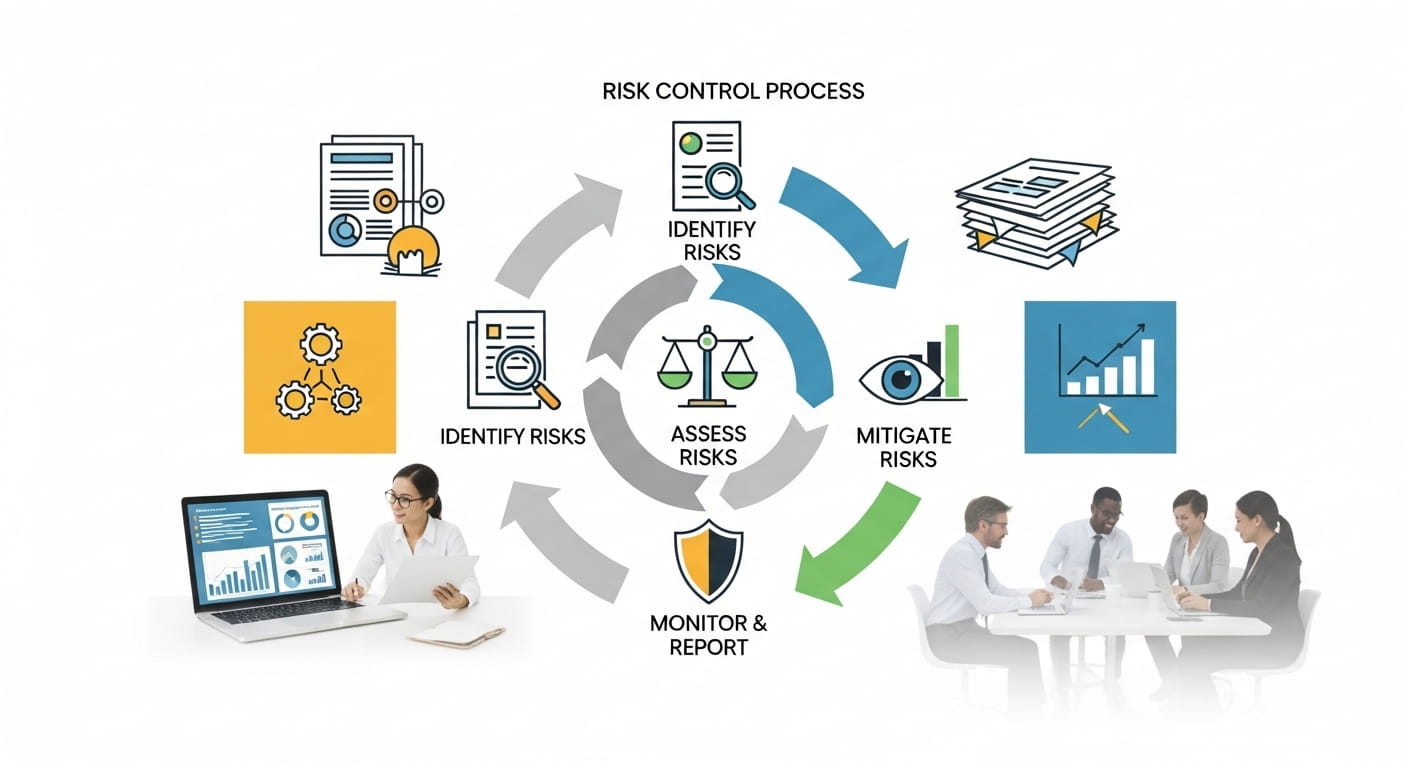
Integrated Risk Management helps organizations manage regulatory obligations in a structured, connected, and proactive way. Instead of reacting to problems after they arise, IRM allows businesses to identify, assess, and manage risks before they turn into compliance failures.
What Is Integrated Risk Management (IRM)?

A Simple Explanation of IRM in Regulatory Compliance
Integrated Risk Management is a structured approach that brings risk management, regulatory compliance, governance, and internal controls together into one coordinated system. Rather than treating compliance as a checklist, IRM focuses on understanding how different risks affect the organization and how controls can address multiple regulatory requirements at once.
In practice, IRM means:
- Identifying regulatory obligations clearly
- Linking those obligations to business risks
- Designing controls that are monitored continuously
- Assigning clear ownership and accountability
This approach helps leadership see the full risk picture instead of fragmented reports from different departments.
How IRM Is Different from Traditional Compliance Approaches
Traditional compliance models often focus on meeting requirements one regulation at a time. While this may work in simple environments, it becomes ineffective as regulations grow and overlap. Manual tracking, spreadsheets, and isolated policies make it easy to miss changes or inconsistencies.
IRM differs because it:
- Connects risks across departments
- Reduces duplication of controls
- Improves visibility for management and regulators
- Supports continuous compliance, not just audit preparation
Organizations that adopt IRM are better prepared for inspections and less likely to face repeated audit findings.
Why Integrated Risk Management Matters for Regulatory Compliance

Reducing Regulatory Risk Before It Becomes a Problem
Regulators increasingly expect organizations to demonstrate ongoing risk awareness and control effectiveness. A reactive approach—fixing issues only after an audit—no longer meets expectations.
IRM helps organizations:
- Identify regulatory risks early
- Monitor controls continuously
- Address weaknesses before regulators highlight them
Research supports this shift. The COSO 2017 Enterprise Risk Management framework explains that when organizations manage risk in an integrated way, they can identify risks earlier and respond better to regulatory and business changes. This helps reduce surprises, improve compliance, and support smoother operations.
Supporting Business Growth, Change, and Market Entry
Compliance risks often increase during periods of change. Market entry, restructuring, mergers, or business relocation introduce new regulatory obligations and operational risks. In the UAE, for example, businesses must navigate federal laws, free zone regulations, and sector-specific requirements.
IRM supports these transitions by:
- Mapping new regulatory obligations to existing processes
- Identifying gaps before operations begin
- Aligning compliance efforts with business strategy
Organizations that integrate risk management into growth plans avoid delays, licensing issues, and enforcement actions.
What Does IRM Mean in Regulatory Compliance Programs?

How IRM Works Inside a Compliance Program
In a regulatory compliance program, IRM acts as the backbone that connects rules, risks, and controls. Instead of tracking regulations in isolation, organizations assess how each requirement impacts operations and where risks may arise.
A practical IRM-driven compliance program includes:
- A clear register of regulatory obligations
- Risk assessments linked to specific laws and standards
- Controls mapped to multiple requirements
- Defined roles and responsibilities
This structure makes it easier to demonstrate compliance during audits and regulatory reviews.
Key Elements of an IRM-Driven Compliance Framework
An effective IRM framework typically includes:
| IRM Framework Element | What It Involves | Why It Matters for Regulatory Compliance |
| Risk Identification and Assessment | Identifying regulatory obligations and assessing where compliance failures could occur across processes and operations | Helps organizations focus on high-risk areas and address issues before regulators identify them |
| Control Design and Testing | Designing controls that are effective, proportionate, and aligned with regulatory requirements, then testing them regularly | Ensures controls actually work in practice and meet regulatory expectations |
| Monitoring and Reporting | Continuously tracking compliance performance, incidents, and control effectiveness over time | Supports early issue detection and provides evidence during audits and inspections |
| Governance and Oversight | Providing senior management and boards with clear, accurate, and timely risk and compliance information | Enables informed decision-making and demonstrates strong regulatory governance |
Standards such as ISO 31000:2018 emphasize that risk management must be integrated into organizational governance, strategy, and decision-making processes, rather than treated as a standalone activity.
Common Challenges When Implementing IRM
While IRM delivers clear benefits, implementation can fail if not handled carefully. Common challenges include:
- Treating IRM as a one-time project rather than an ongoing process
- Applying generic frameworks without adapting them to local regulations
- Failing to train staff and embed IRM into daily operations
Successful IRM requires both technical expertise and practical experience with regulators and regulated industries.
Integrated Risk Management Consulting Services for Regulated Industries

Why Regulated Organizations Need Expert IRM Support
Implementing IRM is not just about adopting a framework or technology. It requires a deep understanding of regulatory expectations, enforcement practices, and industry-specific risks. In the UAE, regulators expect organizations to demonstrate clear accountability, effective controls, and ongoing compliance monitoring.
Expert IRM support helps organizations:
- Align global standards with local regulatory requirements
- Avoid common implementation mistakes
- Build regulator-ready compliance programs
How MCompliance Supports IRM and Regulatory Compliance
MCompliance provides specialized regulatory compliance and risk management services tailored to regulated industries. The focus is on practical, sustainable solutions that work in real regulatory environments.
Support includes:
- Designing and implementing IRM frameworks
- Conducting regulatory gap assessments
- Integrating compliance during market entry or relocation
- Providing ongoing advisory and monitoring support
This approach helps organizations reduce regulatory risk while supporting business objectives.
Who Benefits Most from IRM Consulting Services
consulting services are particularly valuable for:
- Financial institutions and fintech companies
- Healthcare and life sciences organizations
- Energy, infrastructure, and construction firms
- Businesses entering or operating in the UAE
These sectors face complex regulatory landscapes and benefit most from an integrated approach.
Build a Strong, Regulator-Ready Compliance Program
Integrated Risk Management is no longer optional for organizations operating in regulated environments. It provides the structure, visibility, and control needed to meet regulatory expectations and support long-term growth.
If your organization is facing increasing regulatory pressure, planning expansion, or reassessing its compliance framework, expert guidance can make a significant difference. MCompliance works closely with regulated organizations to design and implement IRM solutions that are practical, compliant, and aligned with UAE regulatory requirements.
Get in touch with MCompliance today to strengthen your regulatory compliance program and build a more resilient approach to risk management.
Frequently Asked Questions (FAQs) About Integrated Risk Management
What is Integrated Risk Management?
It manages risks and compliance together, helping organizations identify, assess, and control risks across the business.
How is this different from traditional compliance?
Unlike traditional approaches that track rules separately, it connects risks, controls, and regulations for a more proactive and efficient system.
Which industries benefit most from this?
Regulated sectors such as financial services, healthcare, energy, and companies operating or expanding in the UAE gain the most value.
Can small or growing organizations implement this?
Yes. it is scalable—start with key risks and regulatory requirements, then expand as the organization grows.
How does this support business expansion or relocation?
It identifies new compliance requirements early, aligns controls with local regulations, and reduces delays or penalties.