
Staying compliant with regulations is no longer just a legal requirement, it is a business priority. Across the UAE, regulators continue to strengthen expectations around governance, anti-money laundering (AML), risk management, and corporate accountability. Whether you operate a bank, FinTech company, DNFBP (Designated Non-Financial Business or Profession), or a growing corporation, understanding your compliance obligations helps protect your business and build trust with customers and regulators.
As regulations become more detailed, many organizations turn to regulatory compliance consulting firms for expert guidance. These specialists help businesses understand complex requirements, reduce regulatory risks, and create practical compliance programs that support long-term success.
What Are Industry Compliance Requirements?
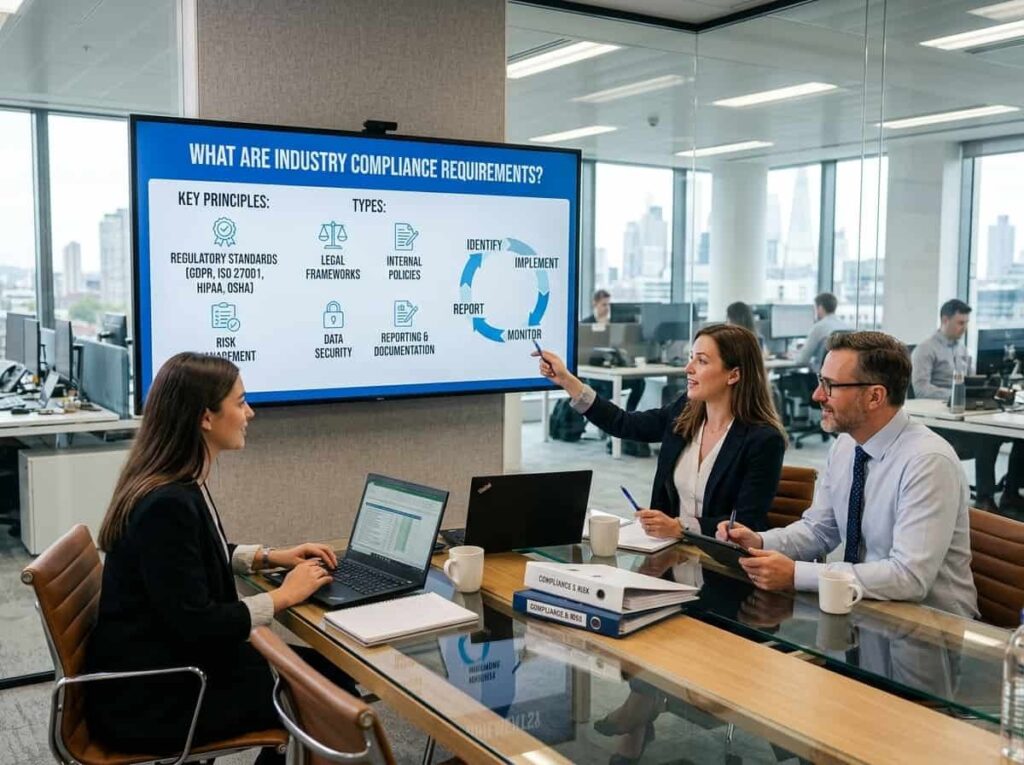
Industry compliance requirements are the rules, regulations, and standards businesses must follow to operate legally and responsibly. These requirements may come from government authorities, financial regulators, industry bodies, or internal governance policies.
Compliance is more than simply avoiding penalties. It helps businesses create consistent processes, reduce operational risks, and demonstrate ethical business practices.
Legal Compliance vs. Regulatory Compliance
Although these terms are often used together, they are different.
Legal compliance means following laws enacted by government authorities, such as labor laws or tax regulations.
Regulatory compliance involves meeting requirements established by regulators overseeing specific industries. In the UAE, organizations may need to comply with regulations issued by authorities such as the Central Bank of the UAE, the Securities and Commodities Authority (SCA), and other supervisory bodies depending on their business activities.
Businesses also need to follow internal policies, governance frameworks, and industry best practices that support effective compliance management.
Why Every Organization Has Different Compliance Requirements
Every organization faces different obligations because compliance depends on several factors, including:
- Industry sector
- Business activities
- Licensing requirements
- Geographic operations
- Customer risk profile
- Regulatory authority
For example, a FinTech company has different regulatory expectations than a real estate brokerage or an accounting firm. Understanding these differences is the foundation of an effective compliance program.
Why Compliance Matters More Than Ever

Today’s business environment is changing quickly. Financial crime risks, cybersecurity threats, and stricter regulations mean organizations must take compliance seriously.
Protecting Your Business from Regulatory Penalties
Failing to comply with regulations can result in:
- Financial penalties
- Regulatory investigations
- License suspension
- Business disruption
- Reputational damage
A proactive compliance program helps organizations identify risks before they become costly issues.
Building Customer, Investor, and Partner Trust
Strong compliance practices demonstrate accountability and transparency. Customers, investors, and business partners are more likely to work with organizations that show a commitment to ethical operations and sound governance.
Supporting Sustainable Business Growth
Compliance is not a barrier to growth—it supports it. Effective governance, risk management, and internal controls improve decision-making and help businesses expand with greater confidence.
According to the Financial Action Task Force (FATF), financial institutions and designated non-financial businesses and professions (DNFBPs) should apply a risk-based approach by identifying, assessing, understanding, and mitigating money laundering and terrorist financing risks in proportion to their level of risk.
Common Compliance Requirements Across Industries

While every industry has unique regulations, several compliance areas are common across most organizations.
Anti-Money Laundering (AML)
AML compliance is essential for many regulated businesses. Key components include:
- Customer Due Diligence (CDD)
- Know Your Customer (KYC)
- Transaction monitoring
- Sanctions screening
- Suspicious transaction reporting
Strong AML controls help businesses detect and prevent financial crime.
Data Protection and Privacy
Organizations collect and manage sensitive customer information every day. Effective data governance protects personal information while helping businesses meet privacy obligations.
Risk Management
Compliance risk assessments help organizations identify weaknesses before regulators or auditors do. Regular reviews improve operational resilience and reduce exposure to regulatory breaches.
Corporate Governance
Good governance establishes accountability throughout an organization. Board oversight, ethical leadership, and clearly defined responsibilities contribute to a stronger compliance culture.
Internal Policies and Procedures
Well-documented policies provide employees with clear guidance on how to meet regulatory obligations. These may include:
- Code of Conduct
- AML policies
- Conflict of Interest procedures
- Whistleblowing policies
- Record retention guidelines
The Organisation for Economic Co-operation and Development (OECD) highlights that strong corporate governance promotes transparency, accountability, sustainable business performance, and long-term value creation, helping organizations build resilience and stakeholder confidence (OECD, 2023).
How Regulatory Compliance Consulting Firms Support Banks, FinTechs, DNFBPs, and Corporations

As regulations continue to evolve, many organizations rely on regulatory compliance consulting firms to strengthen their compliance programs and reduce regulatory risk.
Professional consultants provide practical guidance tailored to each organization’s regulatory environment and business model.
Compliance Gap Assessments
Gap assessments compare an organization’s current compliance program against applicable regulations and industry expectations.
These reviews help identify:
- Missing controls
- Policy weaknesses
- Documentation gaps
- High-risk processes
- Improvement opportunities
AML Compliance Programs
Consultants assist organizations with developing effective AML frameworks by supporting:
- Enterprise-wide risk assessments
- AML policy development
- Customer due diligence procedures
- Sanctions compliance
- Independent compliance reviews
Regulatory Advisory Services
Keeping up with changing regulations requires ongoing expertise.
Compliance advisors help businesses:
- Interpret regulatory changes
- Prepare for inspections
- Improve governance
- Develop practical compliance strategies
- Strengthen internal controls
Compliance Training
Employees play an important role in every compliance program.
Training improves awareness of regulatory responsibilities while helping staff identify potential compliance risks before they escalate.
Benefits of Working with Regulatory Compliance Consulting Firms
Partnering with experienced consultants offers several advantages.
| Benefit | How It Helps Your Organization |
| Access to Specialized Expertise | Compliance professionals understand industry regulations, emerging risks, and evolving regulatory expectations. Their expertise helps organizations implement practical, effective compliance solutions tailored to their industry. |
| Lower Compliance Risk | Independent compliance reviews identify gaps and weaknesses early, allowing organizations to address issues before they lead to regulatory findings, penalties, or enforcement actions. |
| Faster Regulatory Readiness | Rather than developing compliance programs from scratch, organizations benefit from proven methodologies, structured implementation plans, and expert guidance that accelerate regulatory preparedness. |
| Continuous Compliance Improvement | Compliance is an ongoing process. Regular reviews, continuous monitoring, and updates to policies and procedures help organizations adapt to regulatory changes and maintain long-term compliance. |
Find Industry-Specific Compliance Solutions for Your Organization
No two organizations have identical compliance needs. A bank, FinTech startup, corporate group, or DNFBP each operates under different regulatory expectations.
Generic compliance templates rarely address these differences effectively.
Working with an experienced advisory firm allows organizations to develop tailored compliance frameworks that reflect their specific operations, risk profile, and regulatory obligations.
At MCompliance, organizations receive practical support across a wide range of services, including:
- Regulatory advisory
- AML compliance programs
- Compliance gap assessments
- Risk assessments
- Corporate governance reviews
- Internal control development
- Compliance training
These services are designed to help organizations strengthen governance, improve operational resilience, and confidently navigate the UAE’s evolving regulatory landscape.
Conclusion
Industry compliance requirements continue to evolve as regulators respond to new risks and changing business environments. Organizations that invest in effective governance, strong internal controls, and proactive compliance programs are better prepared to manage regulatory expectations while supporting sustainable growth.
For many businesses, partnering with experienced regulatory compliance consulting firms provides valuable expertise, practical guidance, and ongoing support that simplifies complex regulatory requirements.
If your organization is looking to strengthen its compliance framework, improve AML controls, or prepare for future regulatory challenges, MCompliance offers tailored compliance solutions designed around your industry and business objectives.
Contact MCompliance today to learn how expert regulatory advisory services can help your organization reduce compliance risk, strengthen governance, and build long-term regulatory confidence.