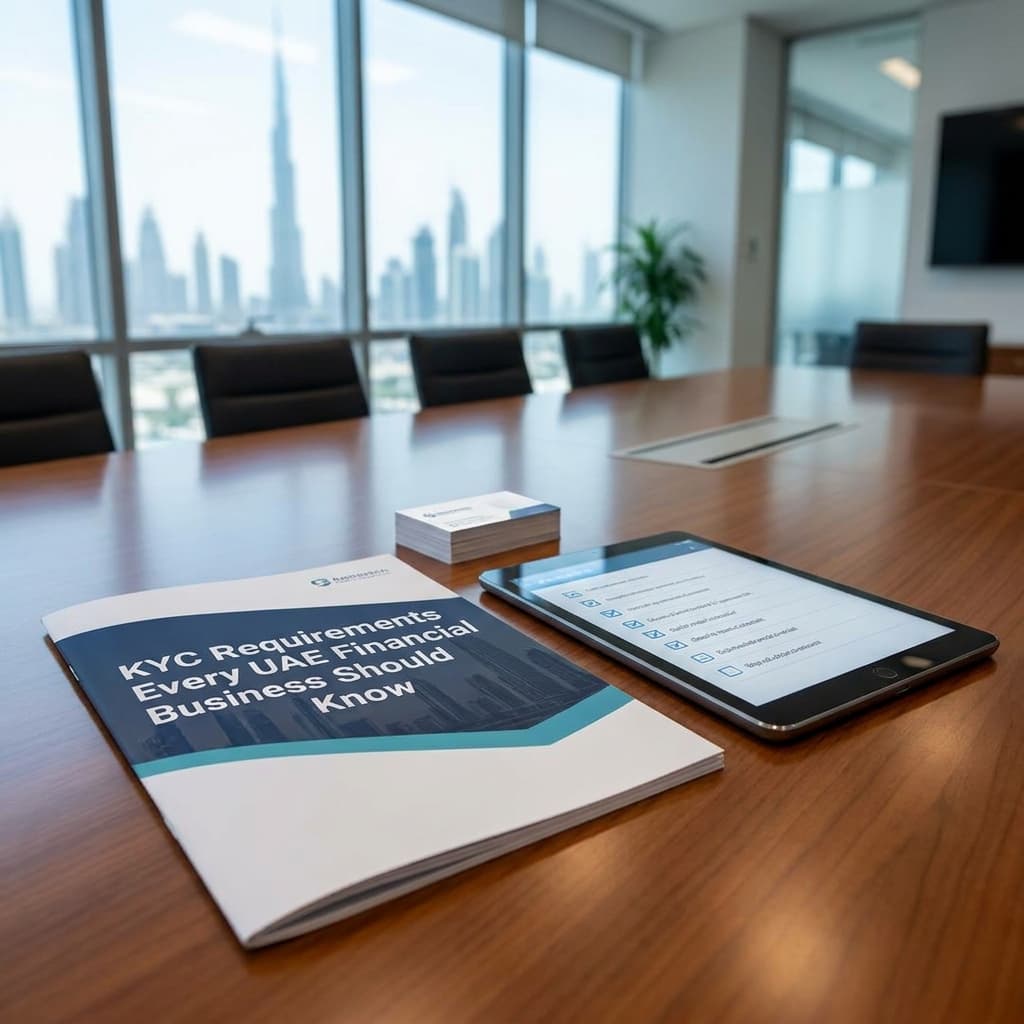
Financial businesses in the UAE operate in one of the world’s fastest-growing regulatory environments. From banks and fintech startups to exchange houses and virtual asset companies, organizations must follow strict Know Your Customer (KYC) and anti-money laundering (AML) rules to protect the financial system.
Today, regulators expect businesses to do more than collect customer documents. Companies must build strong compliance management systems that help identify risks, monitor suspicious activity, and maintain accurate records. Weak onboarding processes or missing customer information can lead to penalties, reputational damage, and operational delays.
For businesses operating in the UAE, understanding KYC requirements is no longer optional. It is a core part of building trust, protecting customers, and staying compliant with local regulations.
According to the Financial Action Task Force (FATF), customer due diligence (CDD) measures help financial institutions identify, verify, and monitor customers in relation to money laundering and terrorist financing risks.
UAE regulators have also increased their focus on AML compliance and risk-based monitoring across financial sectors.
Understanding KYC Requirements in the UAE
KYC stands for “Know Your Customer.” It refers to the process businesses use to verify customer identities and assess potential risks before starting a business relationship.
In the UAE, KYC requirements are closely connected to AML regulations. Financial institutions must confirm who their customers are, understand the nature of their activities, and monitor transactions for suspicious behavior.
Strong compliance management practices help businesses:
- Reduce financial crime risk
- Improve onboarding accuracy
- Meet regulatory expectations
- Protect business reputation
- Prepare for audits and inspections
Which Businesses Must Follow UAE KYC Regulations?
Several industries in the UAE must maintain proper customer due diligence procedures, including:
| Industry | Why KYC Compliance Is Required in the UAE |
| Banks and Financial Institutions | Must verify customer identities, monitor transactions, and comply with UAE AML regulations to prevent financial crime. |
| Fintech Companies | Required to maintain secure onboarding and customer due diligence processes for digital financial services. |
| Insurance Providers | Must assess customer risk and monitor financial activity to meet regulatory compliance obligations. |
| Exchange Houses | Required to conduct identity verification and transaction monitoring due to high exposure to money transfer risks. |
| Real Estate Businesses | Subject to AML and KYC requirements because property transactions can be used to hide illicit funds. |
| Cryptocurrency and Virtual Asset Firms | Must follow strict customer verification and monitoring requirements under UAE virtual asset regulations. |
| Investment Companies | Required to maintain transparent customer records and conduct ongoing due diligence for investors and transactions. |
As UAE financial regulations continue to evolve, businesses across these sectors face increasing pressure to maintain accurate customer records and effective monitoring systems.
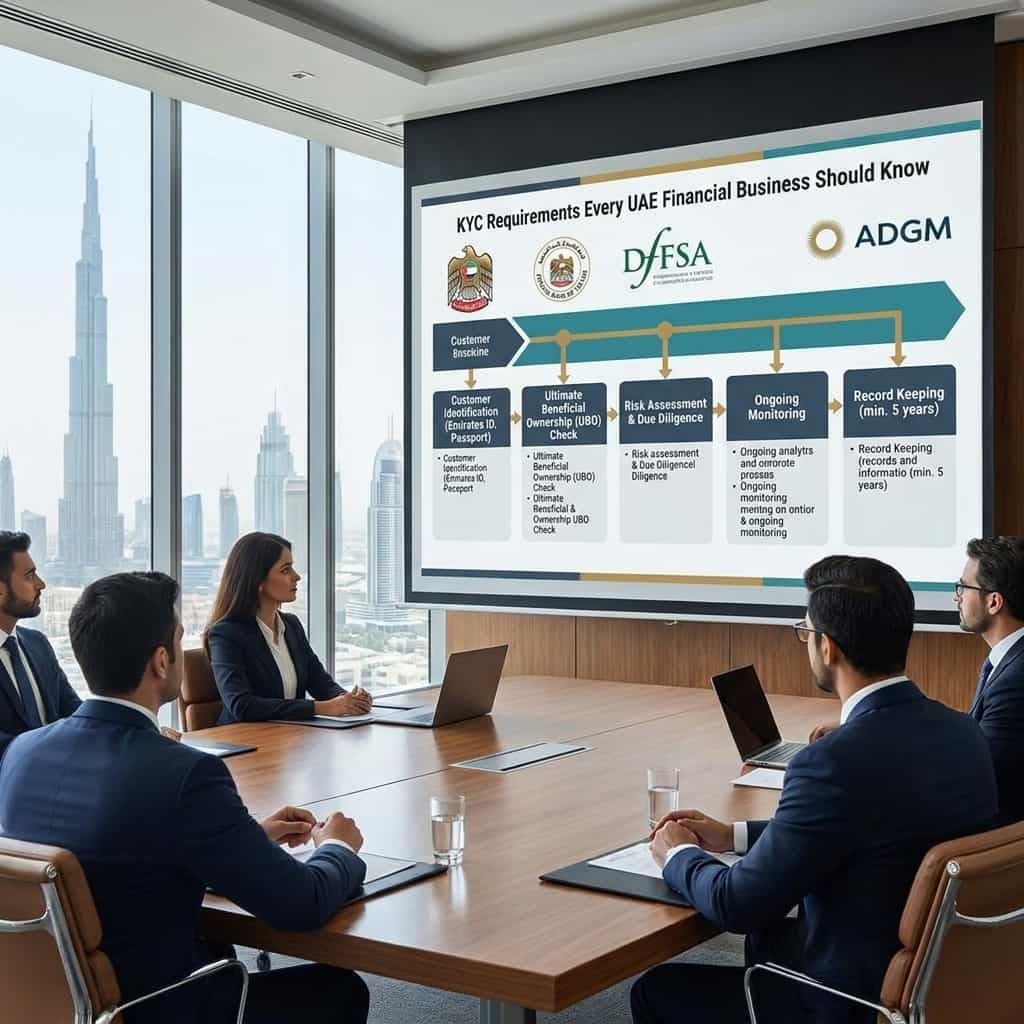
Core Components of an Effective KYC Program
| KYC Framework Component | Description |
| Customer Identification | Businesses must collect and verify official documents such as passports, Emirates IDs, trade licenses, and proof of address. |
| Beneficial Ownership Verification | Companies must identify the individuals who ultimately own or control a business account. |
| Risk Assessment | Customers should be classified based on their risk level. High-risk customers may require enhanced due diligence procedures. |
| Ongoing Monitoring | KYC is not a one-time task. Businesses must regularly review customer activity and update records when needed. |
Common KYC Compliance Mistakes
Many businesses struggle with compliance because of outdated processes or limited internal resources. Common mistakes include:
- Incomplete customer documentation
- Delayed sanctions screening
- Poor recordkeeping
- Lack of ongoing monitoring
- Manual onboarding errors
These problems can create operational inefficiencies and increase regulatory exposure.
Why Traditional Compliance Processes No Longer Work

Many businesses still rely on spreadsheets, emails, and paper-based systems to manage customer due diligence. While these methods may work for smaller operations, they often create problems as businesses grow.
Manual compliance processes can lead to:
- Slow customer onboarding
- Duplicate reviews
- Missing records
- Increased human error
- Difficulty preparing for audits
At the same time, regulators are expecting faster reporting, stronger monitoring, and more detailed risk assessments.
As transaction volumes increase and cross-border business activity grows, organizations need scalable compliance management workflows that support operational efficiency and regulatory readiness.
Compliance Management Workflows for KYC and Customer Due Diligence

Modern compliance management workflows help businesses create a structured and repeatable approach to KYC and AML compliance.
Instead of relying on disconnected systems, businesses can use workflow-based processes to improve consistency, reduce delays, and strengthen internal controls.
What Is a Compliance Management Workflow?
A compliance management workflow is a step-by-step process used to manage customer onboarding, due diligence, approvals, and monitoring activities.
A strong workflow typically includes:
- Customer onboarding
- Document collection
- Identity verification
- Sanctions screening
- Risk scoring
- Enhanced due diligence
- Ongoing monitoring
- Periodic reviews
This structured approach helps compliance teams maintain accurate records and improve audit readiness.
How Risk-Based Due Diligence Improves Efficiency
Not every customer carries the same level of risk. Risk-based compliance allows businesses to focus more attention on higher-risk customers while simplifying reviews for lower-risk clients.
For example, enhanced due diligence may be required for:
- Politically exposed persons (PEPs)
- High-risk jurisdictions
- Complex ownership structures
- Unusual transaction activity
This approach helps businesses use compliance resources more effectively while maintaining strong regulatory standards.
Manual vs Automated Compliance Systems
Automated compliance management systems are becoming increasingly important in the UAE financial sector.
Compared to manual processes, automated systems can provide:
- Faster onboarding
- Improved accuracy
- Real-time monitoring
- Better document management
- Easier audit preparation
Businesses that continue using outdated compliance methods may struggle to keep up with evolving regulatory expectations.
Deloitte Insights notes that automation and regtech solutions can help organizations improve compliance efficiency, streamline monitoring processes, and reduce manual workloads (Deloitte Insights, 2018).
Building an Audit-Ready Compliance Framework
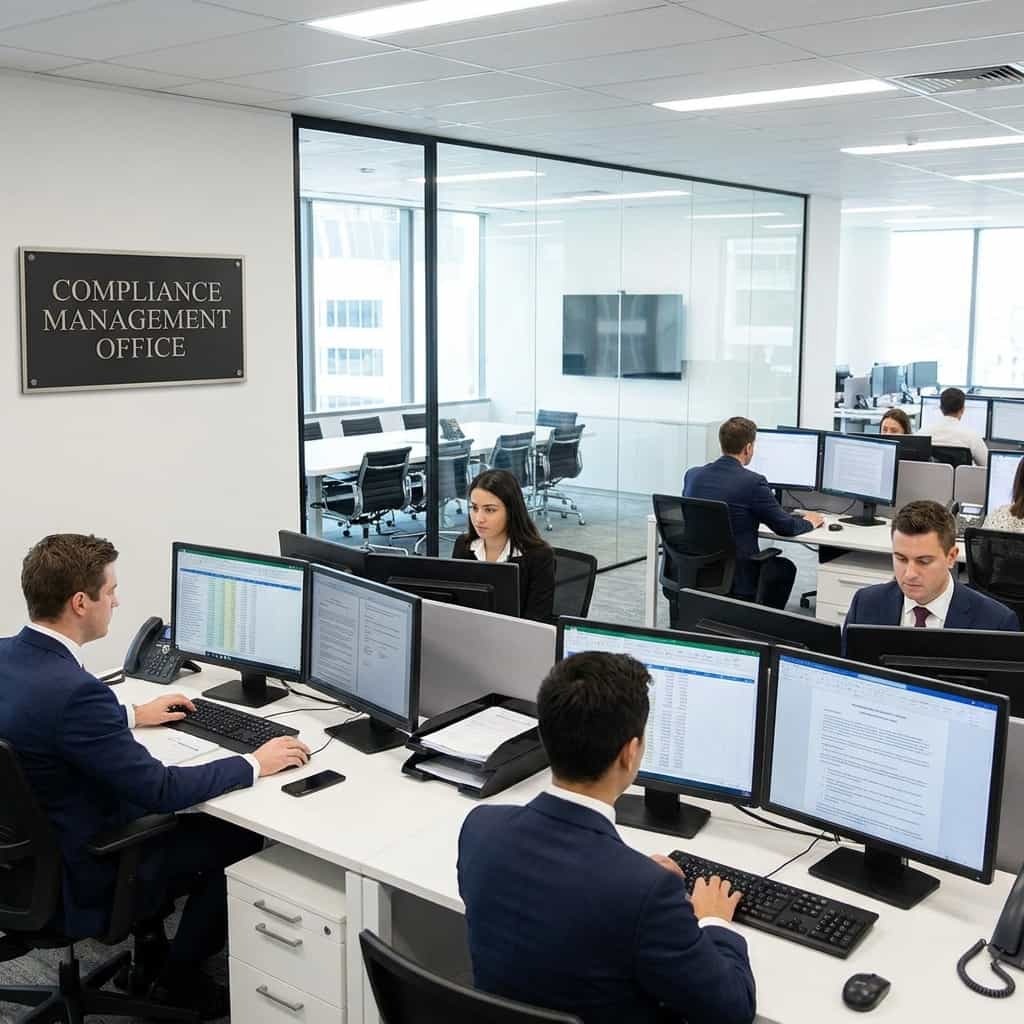
Regulators expect businesses to maintain clear documentation and strong internal controls. Preparing for audits should be part of daily operations rather than a last-minute exercise.
An audit-ready framework should include:
- Updated compliance policies
- Employee training programs
- Record retention procedures
- Internal review processes
- Transaction monitoring controls
- Independent compliance assessments
Businesses should also conduct regular reviews of their onboarding procedures and risk management systems to identify potential weaknesses early.
When to Seek Professional Compliance Support
As businesses expand, compliance responsibilities become more complex. Many organizations reach a point where internal teams need external guidance to manage growing regulatory demands.
Professional compliance consultants can help businesses:
- Design KYC frameworks
- Improve onboarding workflows
- Conduct AML risk assessments
- Prepare for regulatory inspections
- Develop scalable compliance systems
Working with experienced advisors also helps businesses stay informed about changing regulations and industry expectations.
For companies operating in the UAE, partnering with specialists like Mukhtara Compliance Consultancy can provide valuable support in building practical and risk-based compliance management strategies tailored to local regulatory requirements.
Conclusion
KYC compliance is now a critical part of running a successful financial business in the UAE. Regulators expect organizations to maintain strong customer due diligence procedures, accurate records, and effective monitoring systems.
Businesses that invest in structured compliance management workflows are better positioned to:
- Reduce operational risk
- Improve customer onboarding
- Maintain regulatory trust
- Support long-term growth
As compliance expectations continue to evolve, having the right processes and expert guidance can make a major difference.
If your business needs support with KYC procedures, AML compliance, or customer due diligence workflows, explore the professional advisory services available through Mukhtara Compliance Consultancy and connect with experienced compliance specialists who understand the UAE regulatory landscape.
To know more about Regulatory Compliance, please visit the links below.
- The Impact of Weak Internal Controls on Business Reputation
- Why Financial Crime Compliance Is More Critical Than Ever in 2025
- What is KYC and Why It Matters for Businesses in the UAE
- Understanding the DIFC Data Protection Landscape and Why It Matters
- Understanding KYC & AML: Risk Assessment Steps That Safeguard Your Business
- How the UAE Data Protection Law Impacts Your Business Operations
- Embedding the Risk Management Process in FinTech & Banking Operations
Frequently Asked Questions:
1. What is compliance management?
Compliance management involves establishing policies, monitoring regulatory obligations, and ensuring a business follows applicable laws and standards.
2. Why is compliance management important for UAE businesses?
It helps businesses reduce regulatory risks, prevent potential penalties, strengthen governance, and maintain stakeholder trust.
3. Which UAE regulations should financial institutions consider?
Depending on their activities and jurisdiction, financial institutions may need to comply with requirements from the CBUAE, DFSA, or SCA.
4. How can businesses improve their compliance management processes?
Businesses can improve compliance through regular risk assessments, updated policies, employee training, ongoing monitoring, and accurate documentation.
5. How can MCompliance support businesses in Dubai and across the UAE?
MCompliance provides regulatory gap analysis, compliance framework design, AML/KYC advisory, risk assessments, and compliance training tailored to applicable regulatory requirements.